The First Time I Ate Alone in Another Country
- Eating alone isn’t lonely. It can be your favorite kind of me-time.
- Start with places made for one: tea houses, cafés, noodle shops, food courts, and counter seats.
- Learn “this one, please,” “thank you,” and “the bill, please” in the local language.
- When words fail, point, show a photo, or use your phone’s camera translator.
- The first solo meal is the hardest. After that, it becomes a habit you’ll look forward
My first meal alone in another country
It was the late 1990s, and I had just arrived in Taipei from the Philippines. This wasn’t a holiday. I had moved there to work and live on my own, for the first time in my life without my parents nearby.
I was nervous and excited at the same time. I had studied some Mandarin in school back home, but reciting lessons in a classroom is very different from ordering food from a stranger who is waiting for your answer. Back then, fewer people in Taiwan spoke English, so there was no easy way out. If I wanted to eat, I had to try.
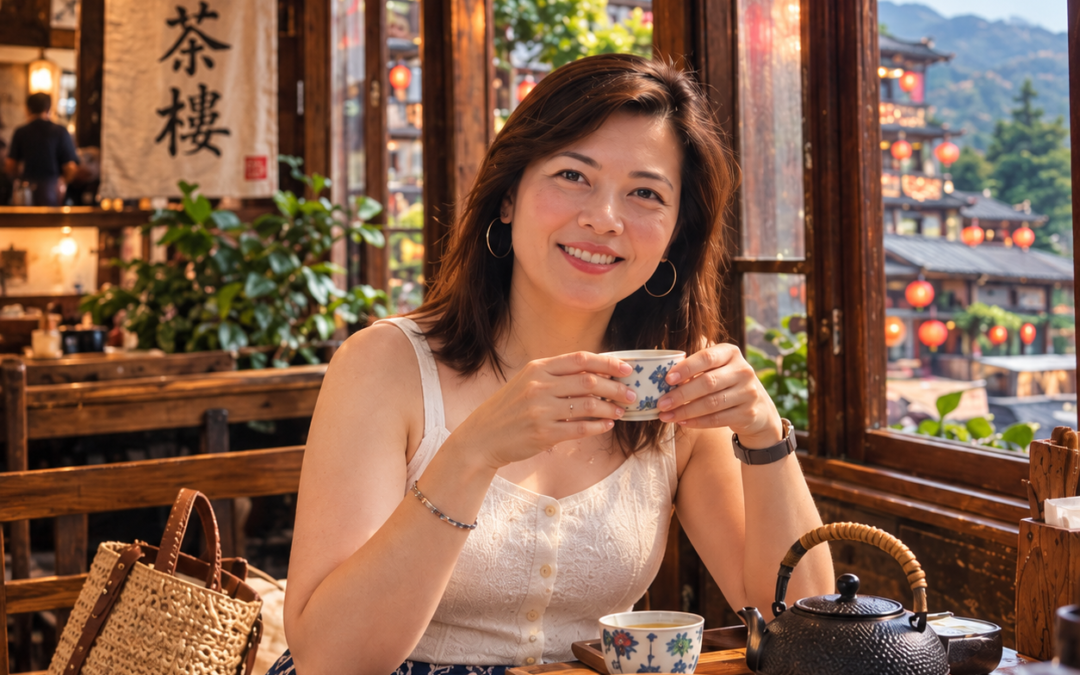
So I chose a cute little tea house. It felt calm and welcoming, the kind of place where sitting alone didn’t seem strange at all.
I don’t remember being embarrassed. I remember feeling proud. I had found my way there, ordered my own food, and sat with my own thoughts in a city that was still new to me.
That small meal set the tone for everything that followed. Since then, I’ve made it a habit to dine out alone as often as I can. It isn’t something I put up with when no one is free. It’s part of my me-time, and I look forward to it.
Why eating alone feels scary (and why it doesn’t have to)
Most of the fear comes from imagining that everyone is watching you. They aren’t. People are busy with their own food, their own friends, and their own phones. And in many cities, from Taipei to Tokyo to Seoul, eating alone is completely ordinary.
When you sit alone, you notice more: the smell of the kitchen, the conversation at the next table, the way locals order. A solo meal is one of the quietest ways to feel at home in a new place.
10 tips for eating alone in a new place or country
1. Start with places made for one. Tea houses, cafés, noodle shops, food courts, bakeries, and night market stalls are full of solo diners. Save the big group restaurants for later.
2. Choose your seat on purpose. A window seat gives you a view. A counter or bar seat lets you watch the cooks and chat if you want to. A corner table gives you calm.
3. Go at quieter hours. An early lunch or a mid-afternoon snack means shorter lines, more patient staff, and no pressure to free up a table.
4. Learn three food phrases. “This one, please,” “thank you,” and “the bill, please” will carry you through most meals. (See the table below.)
5. Point, smile, and show. Picture menus, plastic food displays, and the dish at the next table are your friends. A smile and a point work in every language.
6. Use your phone, not as a shield, but as a helper. A camera translation app can read a menu in seconds. Save photos of dishes you want to try before you go.
7. Ask what’s popular. “What do most people order?” is a great question when you’re unsure, and it often leads to the best dish in the house.
8. Know the local rules. Some restaurants need two orders minimum, like many Korean BBQ places. In Japan, many noodle shops use ticket machines at the door. Watch what others do for a minute before you order.
9. Bring a small companion. A book, a journal, or a postcard to write. It gives your hands something to do while you settle in, and you’ll find you need it less each time.
10. Treat it as me-time. Put the phone down for a few minutes. Taste slowly. Notice how you feel. This is time you chose for yourself.
Handy phrases for ordering alone
| Language | “This one, please” | “Thank you” |
|---|---|---|
| Mandarin (Taiwan) | Zhège, xièxie (this one, thanks) | Xièxie |
| Japanese | Kore o kudasai | Arigatō gozaimasu |
| Korean | Igeo juseyo | Gamsahamnida |
| Thai | Ao an nee (kha) | Khop khun (kha) |
| Vietnamese | Cho tôi cái này | Cảm ơn |
A warm smile does the rest.
What a solo meal gives you
When you eat alone, you learn that you can take care of yourself in a place where you don’t know the rules yet. You learn to ask, to try, and to enjoy your own company without waiting for anyone’s permission. That confidence follows you everywhere: to the next city, the next trip, the next new beginning.
You’re allowed to take yourself out
You don’t need someone across the table to enjoy a good meal. You don’t need perfect words, either. A table for one is still a full table.
You’re allowed to take yourself out, and to enjoy every bite.
Ready for your first solo trip? Get the free Solo Trip Starter Checklist, and when you’re ready, TravelNooks can book the flight to your next table for one.
FAQ
Publish as the last section of the post, under “Frequently asked questions”.
Is it weird to eat alone in a restaurant? No. Eating alone is common in many cities, especially in Asia, where noodle shops, tea houses, and counter seats are designed for solo diners. Most people are focused on their own meal, not on you.
How do I eat alone without feeling awkward? Choose a solo-friendly place, sit at a window or counter seat, go at a quieter hour, and bring a book or journal for the first few minutes. Treat the meal as me-time.
How do I order food when I don’t speak the language? Learn “this one, please” and “thank you,” point at picture menus or food displays, show photos of dishes, and use a camera translation app to read menus.
Where is the easiest place to eat alone while traveling? Tea houses, cafés, noodle shops, food courts, bakeries, and night market stalls are the easiest places for a first solo meal.
Do some restaurants not allow solo diners? Some do, in effect. Many Korean BBQ restaurants require at least two orders. Check the menu or ask before you sit down, or choose noodle shops and food courts instead.
[/et_pb_text]

[/et_pb_column][/et_pb_row][/et_pb_section]