
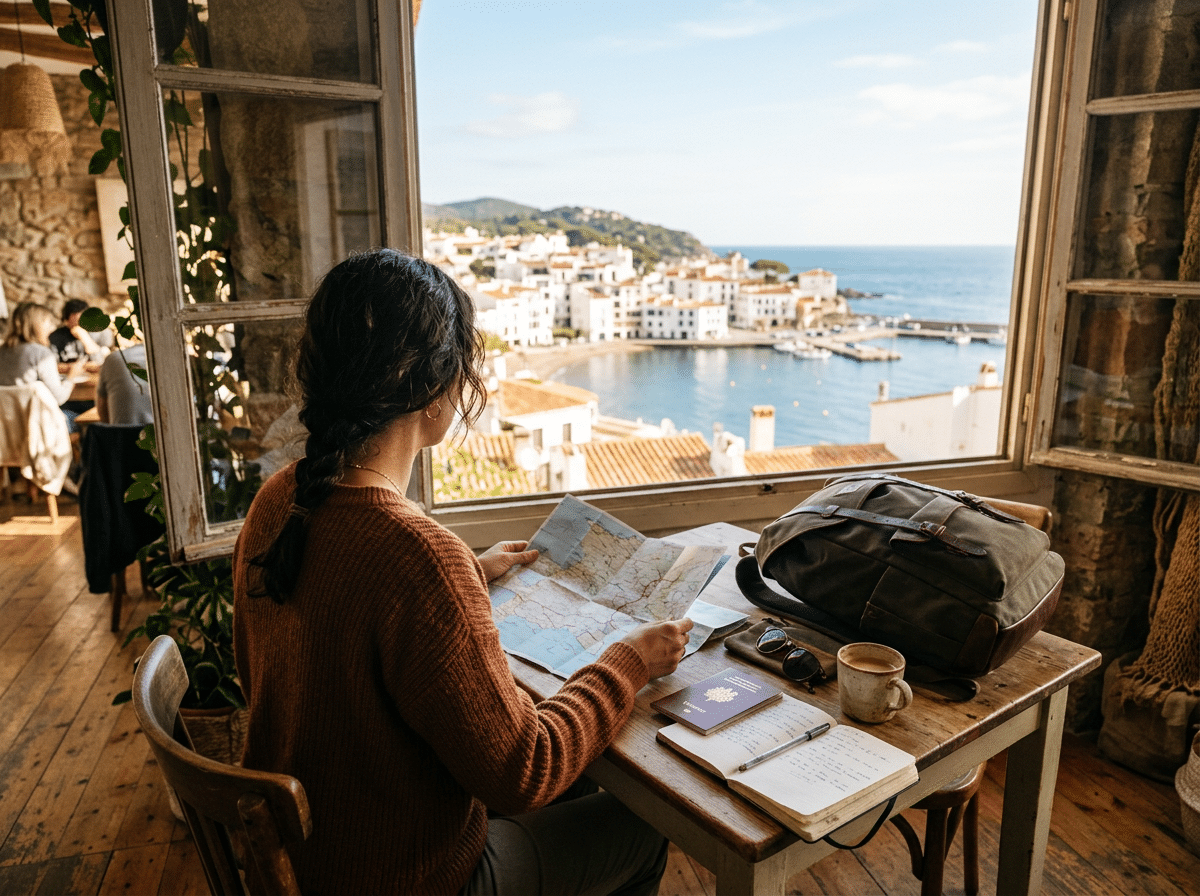
To plan your first solo trip, choose an easy destination close to home, keep it to two or three days, set a peso budget with a 10 to 15 percent buffer, book your transport and first night early, plan one main activity a day, share your itinerary with someone you trust, and give yourself permission to go slowly.
Key takeaways
- Start small: a two- or three-day trip within the Philippines is the gentlest first solo trip.
- Book transport and your first night before anything else, and plan to arrive in daylight.
- Budget in pesos by category, then add a 10 to 15 percent buffer.
- Safety is a set of calm habits, not a reason to stay home.
- You don’t need courage first. You need a plan, and courage tends to follow.
Why your first solo trip feels so big
If you’ve been waiting for a friend, a partner, or the “right time” to travel, you’re not alone. Most women who travel solo didn’t feel ready the first time. They simply had a plan small enough to say yes to.
This guide gives you that plan, in seven gentle steps.
Step 1: Choose an easy first destination
Your first solo trip doesn’t need to be impressive. It needs to be easy. Look for a place that is:
- Close to home: a short flight, ferry, or bus ride.
- Easy to get around: walkable areas, plenty of tricycles or Grab, clear routes.
- Used to travelers: cafés, guesthouses, and tours that welcome people on their own.
- Comfortable in your language: where you can ask for help without stress.
Good first trips for Filipinas include Baguio, Vigan, Iloilo City, Dumaguete, and Cebu City. Choose the one that makes you a little excited, not a little scared.
Step 2: Keep it short: two to three days
A weekend is long enough to learn that you can do this, and short enough that a rainy day or a quiet evening won’t feel like a failure. Save the two-week adventure for trip number three.
Step 3: Set a peso budget, with a buffer
Money worries can follow you on a trip. Settle them before you go. Write down a number for each category, then add 10 to 15 percent for surprises.
| Category | What to include | Your budget (₱) |
|---|---|---|
| Transport | Flight, bus, or ferry; airport transfers; local rides | |
| Stay | All nights, plus any booking fees | |
| Food | Three meals a day, plus coffee and snacks | |
| Activities | Entrance fees, tours, rentals | |
| Extras | Pasalubong, SIM load, laundry, tips | |
| Buffer | 10 to 15 percent of the total above | |
| Total |
Keep your money in two places: a little cash in your bag, the rest in a separate pouch or a card. If one goes missing, you still have the other.
Step 4: Book the essentials first
Book these two things early, because they shape everything else:
- Your transport there and back. Choose times that let you arrive in daylight. Arriving somewhere new in the dark is the most stressful part of many first trips.
- Your first night’s stay. Look for a central location, a 24-hour front desk, and recent reviews from women traveling alone. A small guesthouse or a hotel with friendly staff often feels safer than the cheapest option.
The rest can be booked later, or not at all.
Step 5: Plan loosely: one anchor a day
Overplanning is the fastest way to feel lonely on a solo trip, because every hour becomes a task. Instead, choose one anchor activity per day: a museum, a hike, a food market, a sunset spot. Fill the rest of the day with walking, eating, and resting.
Write your anchors down, along with the address of where you’re staying. That small list will steady you when you feel unsure.
Step 6: Set up your safety habits
Safety on a solo trip comes from a few calm habits you repeat every day:
- Share your itinerary with one trusted person, and agree on a daily check-in time.
- Download offline maps of the area before you leave.
- Carry a charged power bank and keep your phone above 30 percent.
- Save photos of your ID and bookings on your phone and in your email.
- Use registered transport like Grab or the hotel’s recommended driver at night.
- Trust the uneasy feeling. You never need a reason to leave a place, a ride, or a conversation.
These habits aren’t about fear. They’re what let you relax and actually enjoy the trip.
Step 7: Go, and be gentle with yourself
On the day itself, expect a few awkward moments. Eating alone may feel strange for the first ten minutes, then it starts to feel like freedom. Bring a book or a journal, choose a window seat, and order something you’ve never tried.
Check in with yourself each evening: What felt good today? What would I do differently tomorrow? That small reflection is where solo travel starts to change you.
Going abroad for your first solo trip?
If your first trip is outside the Philippines, add these to your list:
- Passport: check its expiry date. Many countries require at least six months of validity.
- Visa: check the official embassy website for your destination, since rules for Philippine passport holders differ by country.
- eTravel: register at the official eTravel website within 72 hours before your flight; departing Filipinos need it.
- Travel tax: ₱1,620 for economy class. Check whether your ticket already includes it before paying separately at TIEZA.
- Return ticket and stay details: keep them ready to show immigration.
You’re allowed to go
You don’t have to wait until someone is free, until you feel brave, or until everything is perfect. You can start with one weekend, one bag, and one plan small enough to say yes to.
You’re allowed to go, even if no one comes with you.
Ready to plan it? Get the free Solo Trip Starter Checklist: every step above on one printable page. When you’ve picked your place, TravelNooks can book your flight and stay.
Sources for the departure rules: TIEZA travel tax rates, Wise Philippines, updated 30 June 2026 · Travel tax abolition status, Suroy.ph, updated 26 August 2026 · eTravel registration guide, The Poor Traveler


FAQ
Publish this as the last section of the post, under the heading “Frequently asked questions”. Each answer starts with a direct reply, so search engines and AI assistants can quote it.
Is it safe for a woman to travel solo in the Philippines? Yes, many women travel solo in the Philippines safely by choosing well-reviewed central stays, arriving in daylight, using registered transport like Grab, and sharing their itinerary with someone they trust.
Where should I go for my first solo trip in the Philippines? Choose a walkable, traveler-friendly city close to home, such as Baguio, Vigan, Iloilo City, Dumaguete, or Cebu City.
How long should my first solo trip be? Two to three days is ideal. It’s long enough to build confidence and short enough to feel manageable.
How much should I budget for my first solo trip? Budget by category (transport, stay, food, activities, and extras), then add a 10 to 15 percent buffer for surprises.
How do I avoid feeling lonely when traveling alone? Plan one anchor activity a day, eat at cafés with counter or window seating, join a small group tour, and check in with a friend each evening.
What do I need before my first solo trip abroad from the Philippines? You need a passport with enough validity (often at least six months), a visa if your destination requires one, eTravel registration within 72 hours of departure, the ₱1,620 economy-class travel tax if your ticket doesn’t include it, and your return ticket and stay details.
Leave a Reply